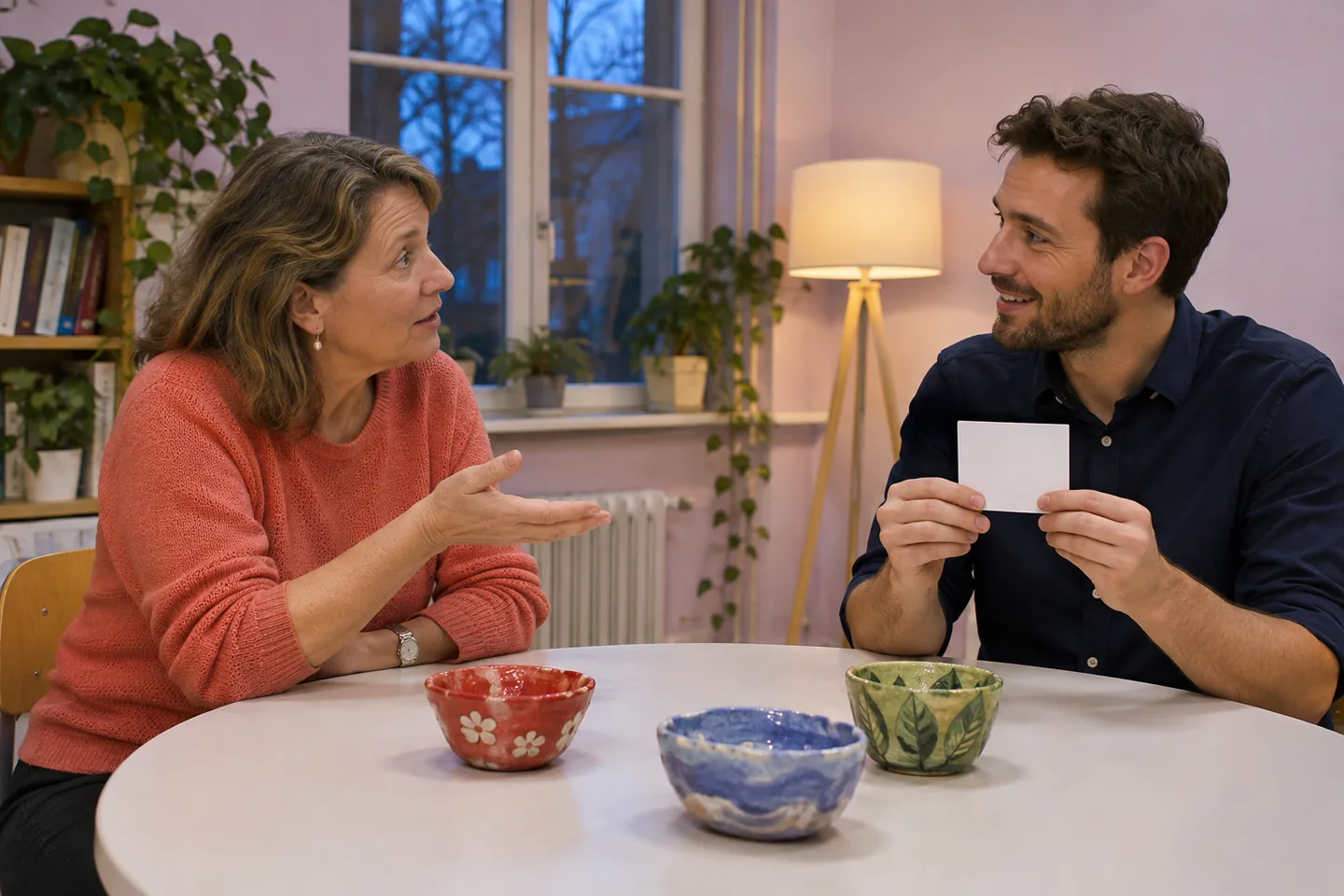
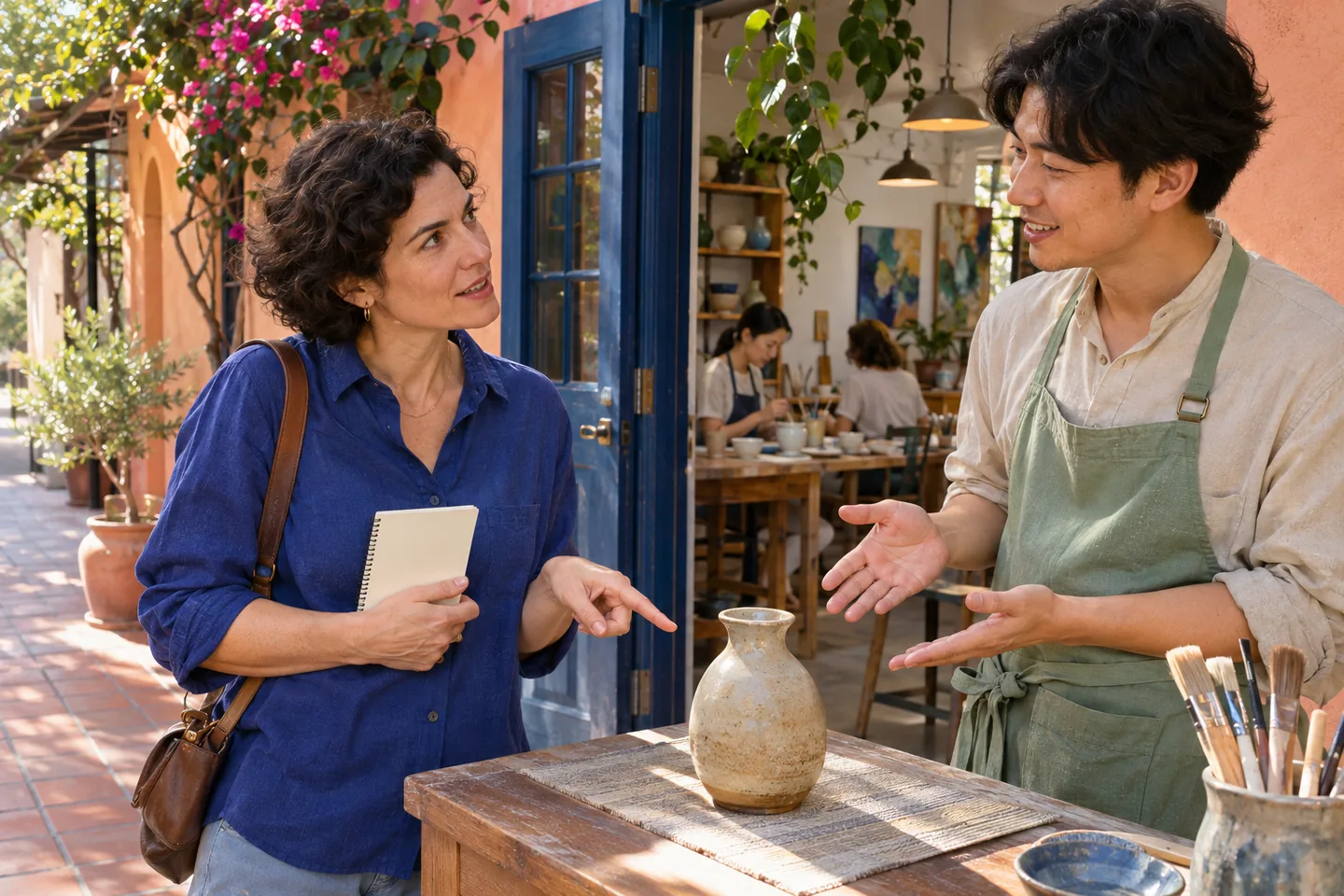
Japanese question words become useful when you know what information you are missing. You might recognise dare, doko and itsu on a vocabulary list, yet still ask about a place when you need a person's name. Start with the answer you want: a person, an object, a location or a time. Then build a short question that leaves that answer open.
This independent guide uses a small set of polite everyday models, paper prompts and a partner exercise. You can complete the routine with a notebook and a checked reference. The aim is a meaningful exchange: ask one clear question, understand the kind of reply it invites and notice whether the reply actually fills the gap.
Japanese question words start with the missing answer
Before translating a sentence, finish this thought: “I need to know the …”. Write person, thing, place or time in your notebook. These four categories give you a practical starting set: 誰, だれ, asks who; 何, なに or なん in the models below, asks what; どこ asks where; いつ asks when. Learn each together with a possible answer category, rather than as an isolated sound.
Imagine a workshop organiser has given you a meeting plan with the person covered. A place name will not repair that gap. If the venue is covered instead, identifying the organiser still leaves you unable to arrive. This simple distinction matters more at first than collecting every interrogative expression you can find. Use fictional plans or ordinary objects so the exercise does not require private information.
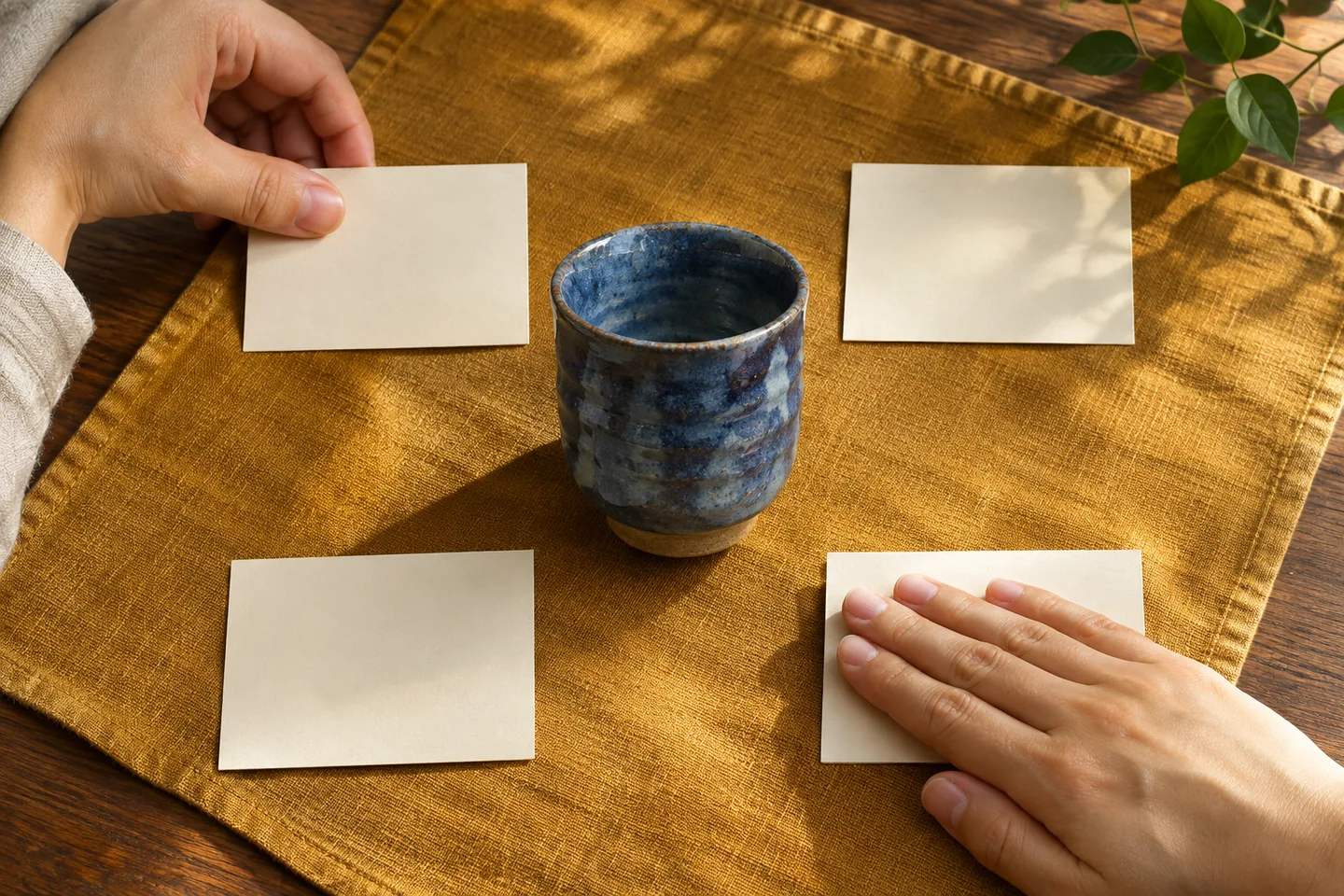
Make four paper prompts and mix them. For each prompt, say the missing category before choosing a Japanese word. Check mistakes by asking why the selected word would invite the wrong reply. Keep the categories separate until the difference feels deliberate. You are training a choice between meanings, not racing through a memorised sequence of four labels.
Separate an open question from a yes-or-no check
A question can ask someone to confirm a guess, or it can leave the missing information open. 本ですか, ほんですか, asks “Is it a book?” これは何ですか, これはなんですか, asks “What is this?” In the first case you have supplied a candidate answer. In the second, the other person must identify the thing. Both are useful, but they solve different problems.
In these polite models, か comes at the end. Do not turn that into a rule that every question in every conversational style must contain か. Begin with a complete checked pattern and keep the style consistent while practising. An open question is also not answered adequately by an automatic “yes” when the speaker asked for an identity or location.
Put a cup and a book on a table. Point clearly, ask the open identification question and let your partner choose the noun. Then hide one object and ask a yes-or-no check about your guess. Compare what the listener has to do in each round. If sentence construction itself is blocking you, review a short grammar explanation before adding more unfamiliar objects to the task.
Keep nani and nan inside checked phrases
The written character 何 has more than one reading. For this first routine, learn 何ですか as なんですか and 何を読みますか as なにをよみますか, “What will you read?” The latter can also refer to habitual reading when the context establishes a habit. The complete phrase supplies information that a single English gloss cannot provide.
Tokyo University of Foreign Studies lists both readings in its vocabulary entry and shows them in different sentence environments. Use that entry to confirm the distinction, then practise a small pair of complete models. Do not invent a universal pronunciation shortcut based only on the first letter of the next word. When you meet an unfamiliar combination, check that combination before making it a prompt.
Write an object-identification cue on one side of a card and a reading-choice cue on another. Cover the Japanese model, make an attempt and then compare the entire phrase, including を and the verb. A correct reading of 何 does not compensate for asking the wrong question. If the noun or verb is unknown, use a dictionary to check its reading and meaning, then return to the original exchange rather than collecting unrelated entries.

Ask about a person without changing the target
だれ asks about a person. 誰が来ますか, だれがきますか, means “Who is coming?” It leaves the person unspecified while keeping the event in view. A reply such as 田中さんです, たなかさんです, identifies Tanaka in a context where the event is already clear. Here が belongs to the checked model; do not replace it mechanically with は because a different sentence in your notes used は.
Keep the exercise socially ordinary. Ask about a fictional workshop participant or a person already mentioned in a practice scene, rather than demanding that strangers identify themselves. A more respectful expression such as どなた may appear in other materials. Recognise that choice when you encounter it, but do not assume that substituting one word makes every situation appropriately polite.
Prepare three invented participant names and a simple arrival scene. Your partner chooses one name privately, you ask the question and then record only the identity supplied. Swap roles and change the name. If you heard a name correctly but wrote it under the venue, the listening problem was the requested category, not just pronunciation. Repair that mismatch before attempting a longer introduction.
Use doko with a complete location or destination model
どこ asks about a place. 図書館はどこですか, としょかんはどこですか, means “Where is the library?” Here the known topic is the library and the location is missing. Contrast that with どこへ行きますか, どこへいきますか, “Where are you going?” The second question asks for a destination. The particle へ is pronounced え in this use.
These examples are complete patterns, not a claim that every place question uses the same particle. A location, destination and place of an activity can require different constructions. Choose one checked model for your task. Changing どこ alone does not decide the relationship between the place and the rest of the sentence. Keep the verb and particle visible when you check your answer.
Draw a tiny fictional map with a library, a room and a meeting point. One learner hides a location and the other asks where it is. In a separate round, hide a destination and use the movement question. Let the answer establish the relevant place before discussing its precise position. This keeps the exercise about obtaining missing information, rather than turning every round into a spatial-preposition puzzle.
Let itsu request a useful time answer
いつ asks when. いつ行きますか, いついきますか, means “When are you going?” With an agreed destination, 明日です, あしたです, “Tomorrow”, can fill the gap. A reply can be brief because both people already know the action. Without that shared context, establish what event you mean before expecting the other person to supply a date or time.
Do not confuse a broad when question with a demand for an exact clock reading. Your partner might answer with a day, an occasion or another useful time expression. Decide in advance what precision the fictional task needs. If you must arrange an exact meeting time, a more specific checked time question may be appropriate. Do not mark “tomorrow” linguistically wrong merely because your private plan expected an hour.
Give each learner a simple event cue and conceal only the time. Ask once, listen and write the answer category plus the information received. Then ask whether the answer is sufficient to act on. If it is too broad, practise an appropriate follow-up from a reliable model. Leave unfamiliar date readings out of the first round so that a calendar-reading difficulty does not obscure your understanding of いつ.
Listen for what the question requires before drafting a reply
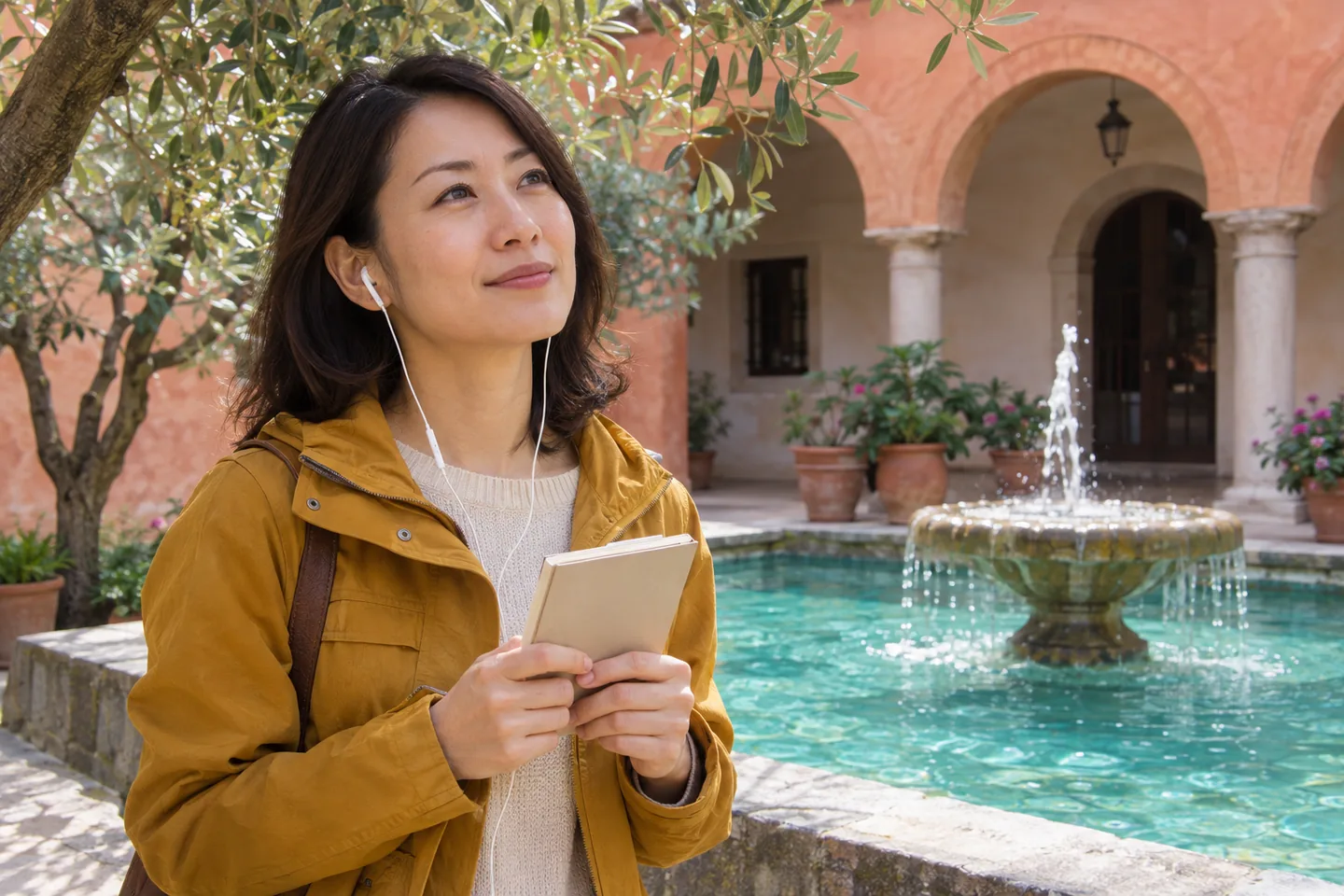
A useful listening attempt has two stages: identify the requested information, then supply or record a suitable answer. Use a short published dialogue with a transcript, or have a partner read one of your checked models naturally. Listen once without looking at the answer. Mark person, thing, place or time before trying to write every word you heard.
The Japan Foundation's Irodori hobby lesson pairs questions with actual replies and includes listening before checking a script. You can use a short segment as a model for an exchange, without treating all its expressions as required vocabulary for today's routine. Keep the original audio attached to its own transcript; do not alter the text and assume the recording still demonstrates your new sentence.
After checking, replay the relevant part and explain your error precisely. Perhaps you recognised the verb but missed いつ, or heard だれ and still answered with a location. Those need different repairs. Use a focused listening guide if you need help making the clip manageable. Avoid copying an entire dialogue as your only response: the next speaker may ask a different question about the same scene.
Finish with an information gap and a delayed return
Create a fictional event sheet with four fields: participant, object, place and time. Give your partner a version with one field missing. They choose the appropriate question and you supply only the information you actually hold. Then exchange sheets. A successful round ends with the missing field correctly filled, not simply with both people agreeing that the sentence sounded familiar.
Check three things separately: the intended category, the complete Japanese model and the meaning of the reply. If you chose the wrong category, revisit the four prompts. If the category was right but the phrase was incomplete, repair that model. If the question was understood but the answer was missed, return to a shorter listening exchange. This makes your next practice step specific and manageable.
On a later day, revisit the sheet with different invented details and no visible model. Begin with one question rather than rereading every note. Keep only the phrases you can verify, and add another interrogative expression when a real gap calls for it. A notebook, reference and willing partner are enough for this routine. The useful result is being able to ask for the information you need and recognise when you have received it.