

Tari tari in Japanese helps when a friend asks about your weekend and you want to mention a few things you did. You walked by the river, read at home and cooked dinner, but you do not want to recite the entire day in order. A list of isolated dictionary forms sounds unfinished. A chain of past-tense sentences can make a relaxed answer feel like a report.
Build one complete answer around two activities. Then change the time, replace an activity and check that the sentence still says what you mean. This guide uses paper prompts alongside a short KanaWay grammar session. The final practice is a conversation in which your partner asks about one of the activities you chose to mention.
Use tari tari in Japanese to give examples
散歩したり、本を読んだりしました (さんぽしたり、ほんをよんだりしました) means “I did things like take a walk and read a book.” The speaker selects activities from the occasion. The sentence does not give a complete timetable or establish which one happened first. Your listener can understand what sort of weekend you had and choose something to ask about.
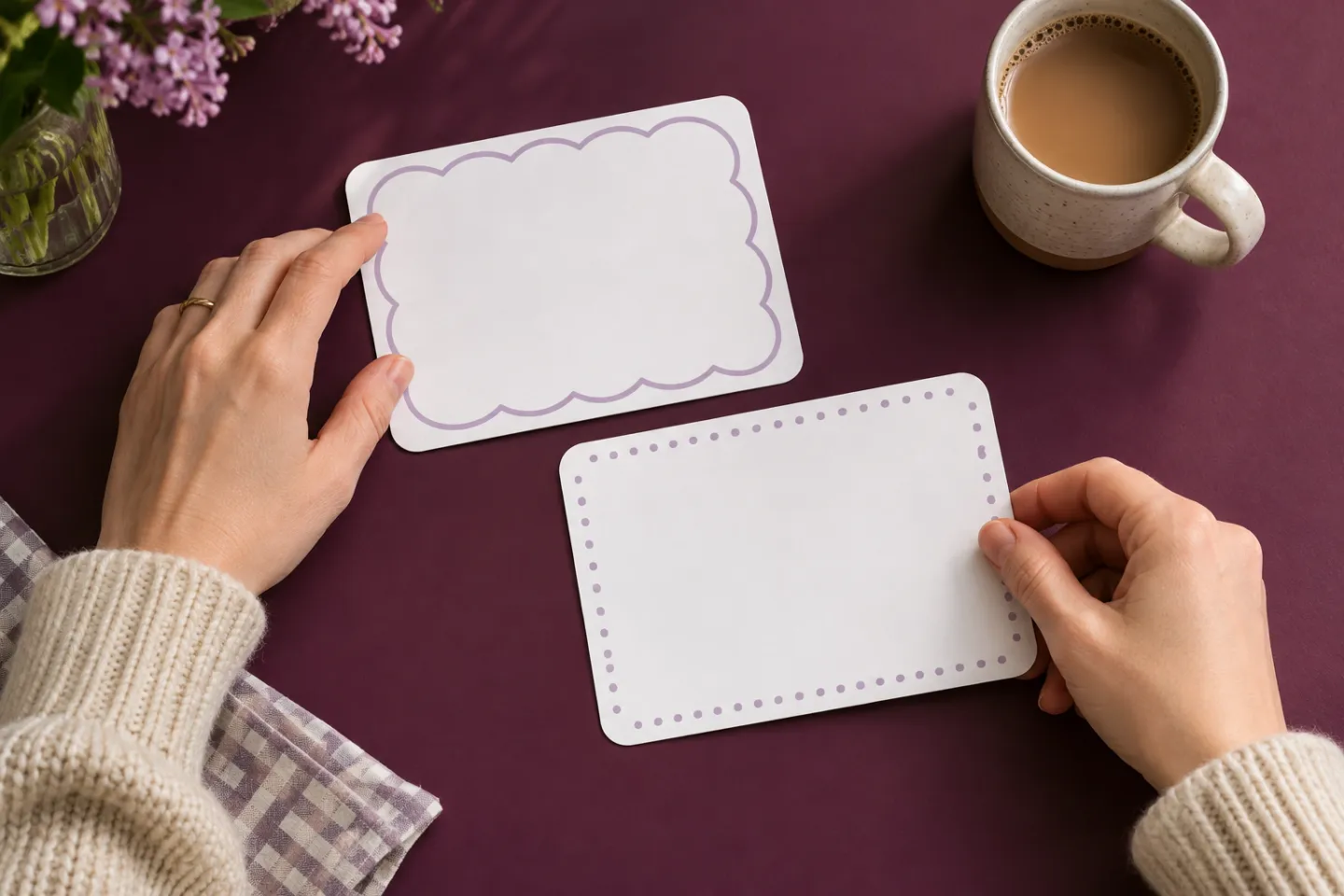
Draw a river and a book on two cards. Place them side by side and use them as cues for the sentence. You can also place a third card face down to remind yourself that the reply is selective. The hidden card does not require a secret third activity in every real conversation. It is a way to remember what the construction allows you to do.
The Japan Foundation's Marugoto teaching notes discuss たり expressions as ways of mentioning activities and note that a single activity can appear in the pattern. Begin with two in this exercise because it makes the choice visible. Once the pair feels familiar, listen for the same structure when a speaker names just one example and moves on. Your first goal is to give an intelligible answer rather than force every conversation into a two-item list.
Build the form from a checked verb
Use the plain past form as your starting point and add り. 読む (よむ, to read) becomes 読んだ (よんだ), then 読んだり. 散歩する (さんぽする, to take a walk) becomes 散歩した, then 散歩したり. Say the plain form aloud before attaching り. If you are unsure about the base verb, look it up in the Japanese dictionary and confirm its reading and meaning.
Try 書く (かく, to write). Its past form is 書いた (かいた), so the activity form is 書いたり. 行く (いく, to go) has 行った (いった), giving 行ったり. The BYU Japanese NOW conjugation overview gives the underlying patterns. Keep a small reference of verbs you actually use instead of trying to recall every possible ending at once.
For a first attempt, write the dictionary form, cover the reference and supply the next two steps. Then check the sequence. If 読んだ was right and you forgot り, the error is different from producing the wrong past form. Mark the exact step that needs work. When you return to the sentence, keep the object with the activity so that 本を読んだり remains a meaningful chunk.
Let the final verb carry the time
The forms before り look like past forms, but the time of the full activity sentence comes from its ending and context. 週末は散歩したり、本を読んだりします (しゅうまつはさんぽしたり、ほんをよんだりします) can describe what you usually do at weekends. 昨日は散歩したり、本を読んだりしました (きのうはさんぽしたり、ほんをよんだりしました) describes yesterday. Read both while keeping the two activity cards unchanged.
Put a “usual weekend” cue above the first pair and “yesterday” above the second. Point to the cue before choosing します or しました. This prevents the first past-looking verb from deciding the time before you have reached the end. If you read only 散歩したり and stop, you have not yet heard the complete answer. Practise listening through the ending even when the activities are already familiar.
Now ask a partner to change the cue without moving the cards. Give the new answer and explain in English whether it is a routine or a report. If your explanation and ending disagree, correct the ending first. You can work on speaking speed later. An accurate slow answer gives the listener a clearer picture than a fast list with an uncertain time reference.
Choose examples that invite a follow-up
A friend who asks about your day usually wants something they can respond to. Choose two activities you can say clearly and add one useful detail to one of them. 川の近くを散歩したり、本を読んだりしました (かわのちかくをさんぽしたり、ほんをよんだりしました) mentions walking near the river and reading. You have given your partner a place they can ask about without turning the reply into a long itinerary.
Keep the examples true when you talk about yourself. For a fictional exercise, label the role card as fictional and answer from that person's point of view. This makes the drill usable even when you spent the weekend working. It also keeps you from feeling obliged to invent an interesting life just to use a grammar pattern. Your partner can ask which book the character read or where they walked.
When the order matters, say so with a structure that expresses it clearly. This activity list by itself does not establish that the walk came before the reading. You can review sentence connections in the Japanese grammar overview before building a chronological story. For this session, leave the two cards side by side. Swapping their positions should not make you claim that the day happened in a different order.

Use KanaWay to repair one part of the answer
Open a short grammar explanation or practice task in KanaWay for Android that includes a verb you know. Predict the form before checking the answer. Read the explanation or feedback and say the complete corrected phrase aloud. If you need the plain past form to construct the activity list, give that step your attention first. A familiar meaning does not always guarantee a familiar conjugation.
Keep the two activity cards outside the app. After the exercise, make your own sentence with the verbs you checked. Say a routine answer, then a past answer. Record on paper whether you hesitated over the verb change, the added り or the final する form. You are giving the next review a specific target. The cards and notes are your own practice aids, so you can change them to match the verbs you are learning.
At the next session, begin with the step you recorded. If the conjugation was wrong, try that verb alone before the full answer. If you stopped after the second たり, practise bringing the sentence to its final verb. When both pieces work, replace one card with a new action. This tests whether you can build an answer rather than reproduce the only pair you have seen.
Hear the list without losing the ending
Ask a partner to read a short answer while you look at three activity cards. Select the two they mentioned and decide whether the answer was about a usual weekend or a past occasion. First listen for the activities, then check the final verb. The Japanese listening practice guide describes ways to use short recordings with a clear task. Here the task gives you something to do with the sounds you recognise.
Use the same verbs in different pairs. If every recording has the walk first and the book second, you may guess from the first word. Put one familiar activity on each new card so that the listening stays focused on the construction. Your partner can change the order and use either します or しました. Check the chosen cards before you try to write the whole answer.
When you need another listen, decide what is missing. If you know both activities, focus on the last few sounds. If you know the time, listen for the object that belongs with 読む or 書く. Replaying with one question is easier to evaluate than trying to hear everything more intensely. After checking, say one natural response to the information.
Finish with an exchange you can continue
Take a cue for a weekend or yesterday and two activity cards. Answer without opening your notes. Your partner chooses one activity and asks about it in a language you both understand. Reply with a small detail. This gives the grammar a job in the conversation. The first sentence offers a few examples, and the next turn develops one of them.
Swap roles and listen to what your partner chooses. Do not require them to use the same two verbs. If the activities are unfamiliar, ask what one means, then try the form with a verb you know. A useful practice exchange can include clarification. When you return to the model, check the reading and the time reference as well as the added り.
For a final check, use the same activities in a routine answer and a report about a finished day. Then replace one activity and do it again. Keep the set small enough that you can explain each sentence. On your next study day, begin with one real thing you did and choose whether a second example helps your listener. The pattern becomes easier to use when selecting the content is part of the practice.