

Toori ni in Japanese gives your listener a way to check what happened. Imagine watching someone fold a sheet of paper. They show you where the first crease goes, and then ask you to fold your sheet the way they did. You could simply say that you folded the paper. With とおりに, you can also say which demonstration your fold followed.
That reference can be a person's actions, a set of instructions or an expectation. This guide uses a few everyday scenes to show how to build the phrase, hear the difference between とおり and どおり, and say what happened when something went as planned. By the end you can describe a model someone should follow and compare a real outcome with that model.
Toori ni in Japanese starts with a reference
In 見本のとおりに紙を折ってください, someone asks you to fold the paper according to the sample. 見本 (みほん) means a sample or model, 紙 (かみ) means paper, and 折る (おる) means to fold. 見本のとおりに is the part that tells you what the folding should match. The rest of the sentence tells you what to do. A useful reading habit is to stop just before とおり and ask which bit of the scene the speaker expects you to look at or remember.
Suppose you have a finished model and several loose sheets on a table. If you ask another person 紙を折ってください, you have given them an action. They may fold once across the middle, fold into quarters or start a paper airplane. Adding 見本のとおりに supplies the reference and narrows those possibilities. The sentence still leaves room for ordinary context. If getting the angle precisely right matters, the example must actually show that angle or the speaker must specify it separately.
Try this with a gesture. Draw a loop on a scrap of paper, then say 見本のとおりに書いてください to a practice partner. Draw a different loop and repeat the same request. The sentence works unchanged because 見本 points to the sample in front of you. If both scraps are visible, point to the one you mean. This makes the role of context tangible before you study the different forms.

Choose between a phrase and a compound
With a noun joined by の, 通り is read とおり. Compare 説明書のとおりに (せつめいしょのとおりに), “according to the instructions,” and 予定のとおりに (よていのとおりに), “according to the schedule.” The first looks to a document for directions. The second looks to a plan for when or how something should happen. Treat the noun and の as a group pointing forward to とおり. You can find similar noun connections in the grammar overview.
Some familiar nouns form a compound with 通り without の. In that case you will hear どおり, as in 予定どおり (よていどおり), “as scheduled,” or 指示どおり (しじどおり), “as instructed.” The written kanji 通り can look the same. Silent reading can therefore hide the distinction. Read 予定のとおり and 予定どおり aloud in alternating order, giving both versions their long vowel. Notice the presence or absence of の first, then notice the initial consonant of 通り.
Record a familiar compound as a whole item when you meet it. You can use 予定どおり to discuss a meeting starting on schedule, and 指示どおり when reporting that you carried out instructions. When you are unsure whether another noun makes a usual compound, the noun plus の construction gives you a straightforward pattern. A whole phrase is also easier to find again while listening than a memorized rule with no example attached.
Put the demonstration before とおり
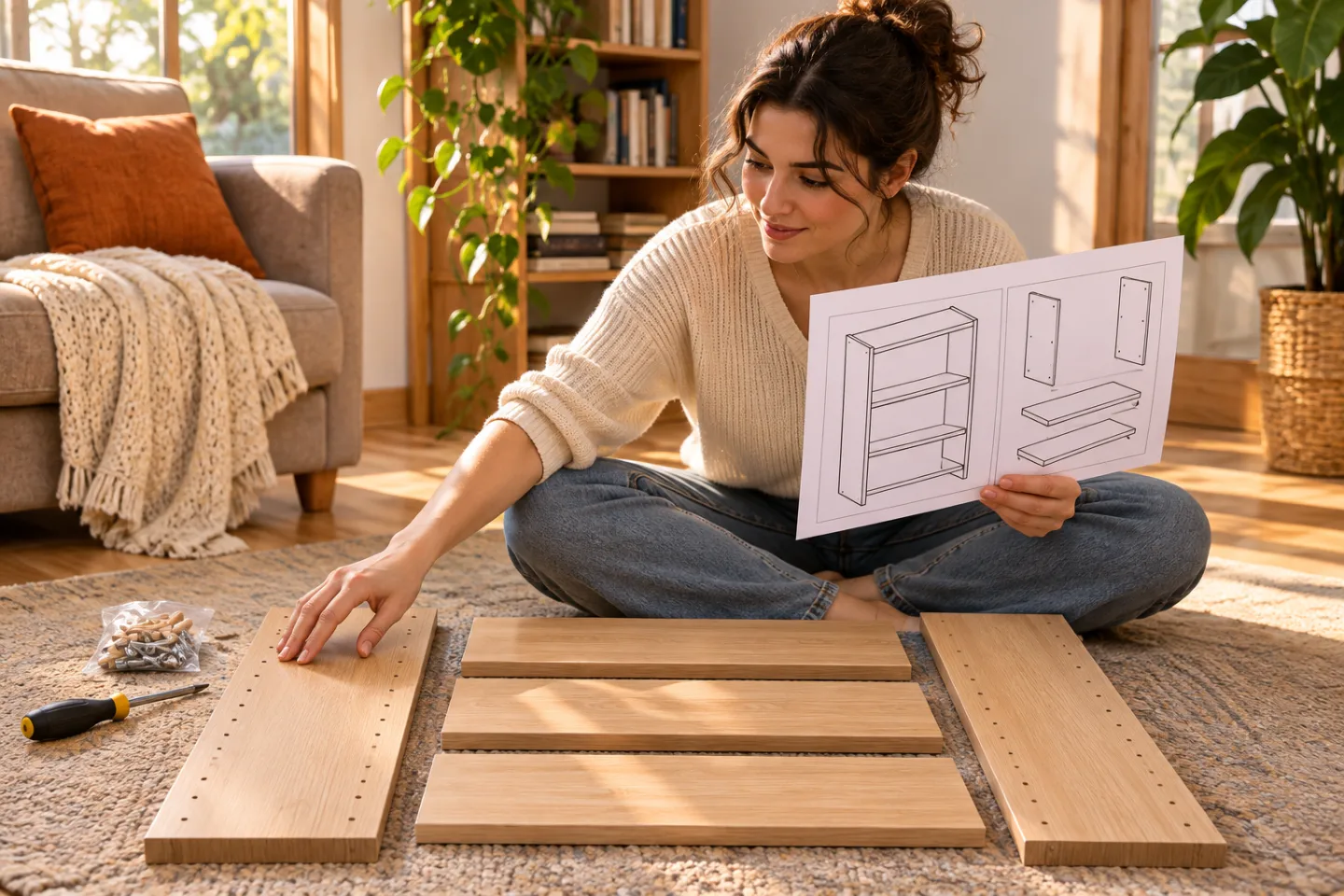
A verb phrase can supply the reference directly. In 私がやったとおりにやってみてください, the first やった refers to what the speaker already did. The second やってみてください asks you to try it yourself. At a pottery wheel, the instructor can center a lump of clay, step aside and use this sentence. A learner should look back at the demonstration and try to reproduce the relevant actions.
The form of the first verb helps establish the context. 私が言うとおりに書いてください can introduce a dictation that is about to begin. 私が言ったとおりに書いてください points back to words the speaker has already said. In either sentence the request remains polite at the end. The plain forms 言う and 言った belong inside the reference phrase. You can keep practicing this with one activity rather than having to learn a different set of nouns for every example.
Suppose you hear the instruction after missing the beginning of a demonstration. You may want to ask もう一度やってもらえますか, “Could you do it one more time?” That is a useful response because the grammar identifies where to look, while the demonstration supplies the missing information. In your notes, keep the Japanese request and one sentence about what happened just before it. The second line will help you choose between 言う and 言った when you use the phrase again.
Compare a result with a plan or expectation
予定どおりに電車が着きました means that the train arrived as scheduled. 予定どおり is also natural without に in this report. Imagine a friend who is picking you up and wants to know whether the agreed time still works. By saying 予定どおりに着きました, you tell them the recorded arrival and expected arrival line up for the purposes of that conversation. A precise report would add the actual time or explain any relevant delay.
The reference can also be a private expectation rather than a written plan. In 思ったとおり、店は閉まっていました, the speaker finds the shop closed and says this is what they expected. 思った (おもった) looks back to what the speaker thought. The following clause presents what they found. As a listener, ask whether the reference would exist even if nobody had drawn up a timetable or given an instruction. That question separates an expectation from a scheduled event.
You can also report a mismatch. 予定どおりには進みませんでした means that things did not go according to plan. The は after に makes the planned course the point of comparison. You might then explain that the first task took an extra hour. In a real message, that explanation matters more than a general statement of failure. Try pairing the Japanese line with one precise fact about what changed, such as a later start or a changed route.

Hear what is being matched
When two people are practicing guitar, one can ask the other to copy both the position of the fingers and the order in which they move. In a quick exchange, what counts as a good match often comes from what the pair just discussed. If they have been talking about finger placement, 私がやったとおりに usually directs attention there. If they have been talking about rhythm, the same construction may refer to timing. Practice picking that detail out of the preceding exchange.
For a short listening drill, ask a partner to record three phrases with a pause after each one. Use 見本のとおりに, 指示どおりに and 私が言ったとおりに. Listen once and name the source of each reference in your own language. Listen again and catch the seam before 通り. With the first item it is の, with the second the noun ends and どおり begins, and with the last you hear the past verb. The listening practice page offers more ways to work with short stretches of audio.
Try the exercise in reverse if you are working alone. Write “sample,” “instructions” and “words already spoken” on separate slips. Draw one at random and say its Japanese phrase before checking your notes. Keep a copy of one recording and test again the following day. A successful attempt should tell you which reference you heard before you have to reconstruct the entire sentence.

Recognize shorter replies and noun phrases
そのとおりです is a complete reply meaning “That's right” or “Exactly.” その points to something that was just said. For instance, a colleague asks, 「受付は二階ですね」, “Reception is on the second floor, right?” If that matches the information you have, you can say 「そのとおりです」. The form ends with です and stands on its own. It is useful to learn it as a response with an actual preceding line.
In 見本のとおりの形, “a shape like the sample,” the second の links the reference to the noun 形 (かたち), “shape.” Read it from right to left in chunks if the two instances of の slow you down. First locate the noun 形, then ask what kind of shape the longer phrase identifies. The familiar chunk 見本のとおり supplies the comparison. In 見本のとおりに折る, the word after に is the folding action instead. The dictionary is useful when you want to see whether a noun such as 形 or 見本 has the sense you need.
The same kanji can name a street or appear in expressions for a number of ways, so surrounding words still matter. This lesson concentrates on matching a reference. When looking up a new line, bring along both the words before 通り and the phrase that follows it. That small amount of context will usually narrow down what you are looking for far faster than searching for the isolated character string.
Test the pattern with three new situations
Imagine these three scenes. Someone has already shown you a simple step, and you want another person to try it the same way. A meeting started at the advertised time, and you are telling a colleague. A lamp was assembled by following the printed instructions, and you are answering a question about the process. Write a short Japanese line for each scene, leaving the source of the comparison explicit.
Possible answers are 私がやったとおりにやってみてください, 会議は予定どおりに始まりました, and 説明書のとおりに組み立てました. The first uses a completed demonstration, the second a familiar compound, and the third a noun with の. Inspect your own answers for that relationship before you worry about optional wording. A different action or noun can still be a good answer if the form and reference fit the situation.
Finish by changing one fact in each scene. The teacher will demonstrate in a moment, the meeting began late, and the manual shows a different assembly sequence. Say what you can now claim and what detail you would need to explain. That final change is worth practicing because you will rarely encounter the exact sentence you memorized. If you can name what the action should match and decide whether the result agrees, you can use the construction when the nouns and verbs are new.